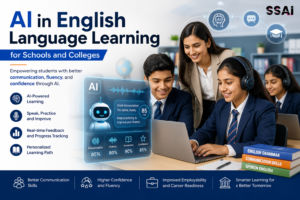
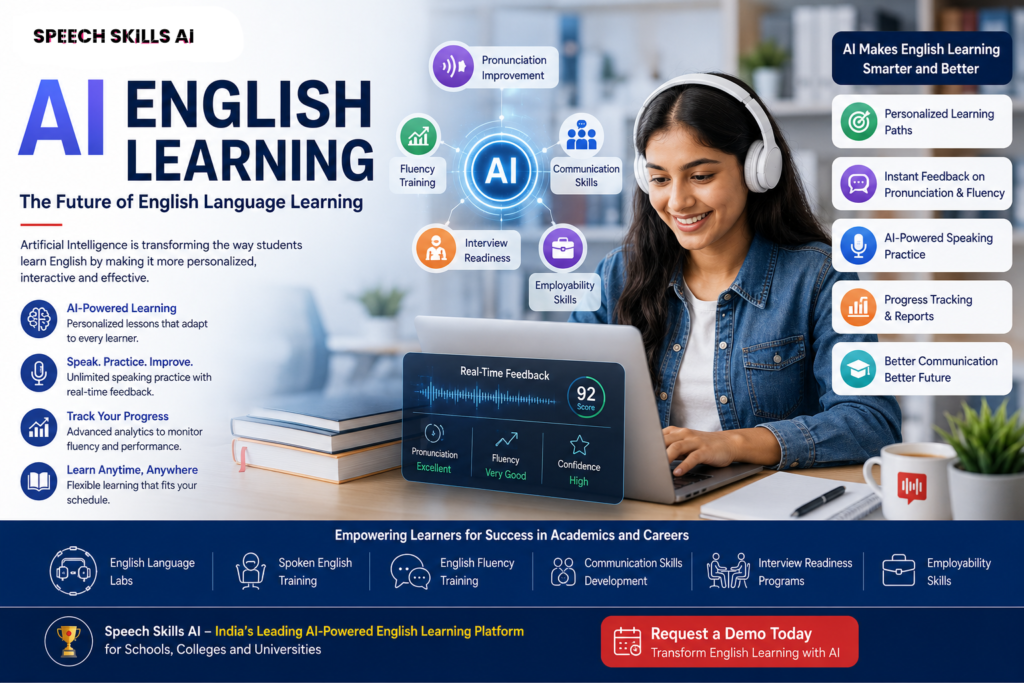
AI in English Language Learning is changing how students learn, practice, and master English. For many years, language learning relied heavily on classrooms, textbooks, and limited speaking opportunities. However, the rise of artificial intelligence is creating a more personalized and effective learning experience. Today, schools, colleges, universities, and training institutes are looking for smarter ways to improve communication skills, fluency, and career readiness. As a result, AI-powered solutions are becoming an important part of modern education.
Moreover, learners now expect instant feedback, flexible practice options, and measurable progress. Traditional methods alone often struggle to meet these expectations. Therefore, educational institutions are increasingly investing in AI-driven language learning platforms that can provide personalized support at scale.
Want to see how Speech Skills AI can help students build confidence in spoken English? Request A Demo and explore the platform in action.
What You Will Discover in This Article
- The future of AI in English Language Learning
- How Spoken English Training for Students is evolving
- The role of English Language Labs in modern education
- Why Pronunciation Improvement matters
- The importance of Communication Skills Development
- How Employability Skills are linked to English proficiency
- The role of Interview Readiness training
- The impact of English Fluency Training
- The future of AI in Education
- How Language Learning Technology is reshaping learning
AI in English Language Learning Is Creating Personalized Learning Experiences
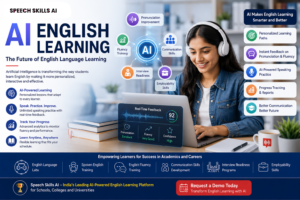
AI in English Language Learning is helping educators move beyond traditional one-size-fits-all teaching methods. Every learner has different strengths, weaknesses, and learning speeds. However, conventional classroom environments often make it difficult to provide personalized attention.
Moreover, AI-powered platforms solve this challenge by analyzing learner performance and adapting learning paths accordingly. As a result, students receive targeted support that helps them improve faster.
According to UNESCO’s Artificial Intelligence in Education initiatives, AI has the potential to make learning more inclusive, personalized, and accessible for learners worldwide.
AI in English Language Learning and Spoken English Training for Students
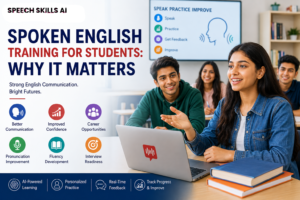
Spoken English Training for Students is becoming more effective because AI can provide unlimited speaking practice opportunities. Traditionally, students had limited chances to practice speaking in classrooms due to time constraints.
However, AI-powered speaking tools allow learners to practice whenever they want. Furthermore,As a result, students can practice speaking and receive feedback.
Key benefits include:
- More speaking opportunities
- Personalized feedback
- Reduced fear of making mistakes
- Better communication confidence
- Continuous improvement tracking
Consequently, students become more comfortable using English in academic and professional settings.
AI in English Language Learning Through Modern English Language Labs
Modern English Language Labs are evolving rapidly. Earlier language labs focused mainly on listening and repetition exercises. Today, AI-powered language labs offer interactive speaking activities, speech analysis, and learner performance tracking.
As a result, educational institutions can create more engaging learning experiences while measuring outcomes more effectively.
Modern English Language Labs can provide:
- Real-time speech assessment
- Performance analytics
- Interactive speaking exercises
- Personalized learning recommendations
- Progress monitoring
Pronunciation Improvement Through AI-Powered English Learning
Pronunciation Improvement remains one of the biggest challenges for English learners. Even students with strong grammar and vocabulary often struggle with spoken communication because of unclear pronunciation.
Fortunately, AI technology can analyze speech patterns and identify areas that require improvement. Therefore, learners can focus on specific sounds, words, or speaking habits that affect clarity.
According to Cambridge English, pronunciation plays a critical role in effective communication and language proficiency.
Pronunciation Improvement and Communication Skills Development
Communication Skills Development becomes more effective when students can speak clearly and confidently. Pronunciation is not only about sounding correct; it is about being understood.
Therefore, institutions that invest in pronunciation training often see improvements in:
- Presentation skills
- Group discussions
- Public speaking
- Classroom participation
- Workplace communication
Communication Skills Development Is Essential for Career Success
Communication Skills Development is now one of the most important objectives for educational institutions. Employers expect graduates to communicate ideas clearly, collaborate effectively, and interact professionally.
As a result, communication training is no longer considered optional. Instead, it has become a core employability requirement.
AI-powered platforms support communication development through regular speaking practice, feedback, and performance analysis. Consequently, students gain confidence and improve their ability to communicate effectively.
Employability Skills and English Communication for Students
Employability Skills are directly connected to communication ability. Technical knowledge may help candidates secure interviews, but communication skills often determine long-term career success.
Furthermore, employers consistently rank communication among the most valuable workplace skills.
AI in English Language Learning for Interview Readiness
Interview Readiness is another area where AI is making a significant impact. Many students struggle during interviews because they lack confidence rather than knowledge.
AI-based practice environments help learners prepare through:
- Mock interviews
- Speaking assessments
- Communication feedback
- Confidence-building exercises
- Personalized improvement suggestions
As a result, students become better prepared for real-world hiring processes.
English Fluency Training With Personalized AI Practice
English Fluency Training is moving beyond traditional classroom exercises. Today, AI enables learners to engage in realistic speaking scenarios and receive immediate feedback.
Moreover, fluency development becomes more effective when learners receive consistent practice opportunities. AI platforms support this through guided conversations, speaking activities, and progress tracking.
Therefore, learners can improve both confidence and fluency over time.
The Role of AI in Education and English Language Learning
AI in Education is transforming how institutions deliver learning experiences. Rather than replacing educators, AI supports teachers by providing insights, analytics, and personalized learning opportunities.
As a result, institutions can improve student engagement while maintaining educational quality.
Benefits include:
- Personalized learning experiences
- Faster assessments
- Better learner insights
- Improved engagement
- Scalable learning solutions
Language Learning Technology and the Future of English Learning
Language Learning Technology is advancing rapidly. Speech recognition, artificial intelligence, data analytics, and adaptive learning systems are helping institutions deliver more effective language programs.
Consequently, schools and colleges can focus on outcomes rather than simply delivering content. This shift is particularly important because employers increasingly expect graduates to possess strong communication and language skills.
Educational institutions that adopt modern Language Learning Technology today will be better prepared for tomorrow’s learning needs.
Why Speech Skills AI Is Leading the Future of English Language Learning
As institutions explore modern language learning solutions, they need more than basic language software. They need a platform that combines speaking practice, pronunciation assessment, fluency development, communication training, and learner analytics.
Speech Skills AI stands out because it brings together:
- AI-powered speech analysis
- Pronunciation Improvement tools
- English Fluency Training
- Communication Skills Development
- Interview Readiness support
- Institutional performance reporting
- Scalable deployment for schools and colleges
Unlike traditional learning platforms, Speech Skills AI focuses on measurable outcomes that help institutions improve student communication and employability.
Conclusion: AI in English Language Learning Will Define the Future of Education
AI in English Language Learning is shaping the future of English education by making learning more personalized, accessible, and effective. Through advanced English Language Labs, focused Pronunciation Improvement, stronger Communication Skills Development, better Employability Skills, enhanced Interview Readiness, and personalized English Fluency Training, institutions can create meaningful learning outcomes.
At the same time, advancements in AI in Education and Language Learning Technology are helping educators deliver scalable and measurable learning experiences.
If your institution is looking to prepare students for academic and professional success, now is the right time to explore modern AI-powered language learning solutions.
Ready to transform English learning at your institution? Request a demo today and discover how Speech Skills AI can help build confident, fluent, and career-ready English speakers.