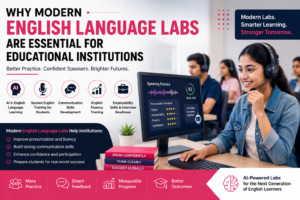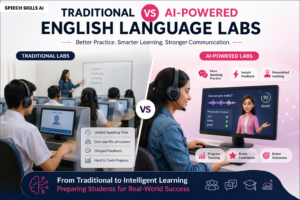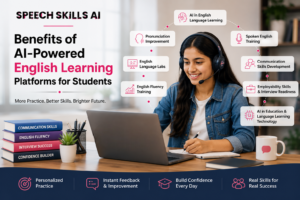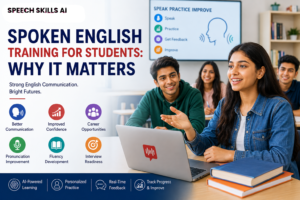
Traditional vs AI-Powered English Language Labs is an important topic for schools and colleges that want to improve students’ English speaking and communication skills. While traditional language labs give students access to learning materials and guided lessons, AI-powered labs can offer more opportunities to practise speaking, receive feedback, and build confidence.
Today, students need more than grammar knowledge. They must be able to speak clearly, take part in discussions, prepare for interviews, and communicate with confidence. Therefore, choosing the right language learning method can make a real difference to their progress.
To learn how Speech Skills AI can support your students’ English speaking and communication skills, Request a demo.
What You’ll Learn in This Blog
- How traditional English language labs work
- How AI in English Language Learning changes student practice
- Key differences in feedback, speaking time, and progress tracking
- The role of AI in pronunciation, fluency, and communication
- What schools should consider before choosing a language lab
1. What Are Traditional English Language Labs?
Traditional English Language Labs help students learn through recorded lessons, audio activities, language exercises, and teacher-led practice. They are useful for building vocabulary, improving listening skills, and understanding the basics of English.
In this model, teachers usually guide the class, explain mistakes, and help students improve. However, when a class has many students, it may be difficult to give each learner enough time to speak individually.
For example, a student who struggles with pronunciation may need repeated practice. If the teacher has limited time, that student may not receive enough individual attention during every session.
Traditional labs still have value. The main challenge is making sure every student gets enough active speaking time and useful feedback.
2. How AI-Powered English Language Labs Work
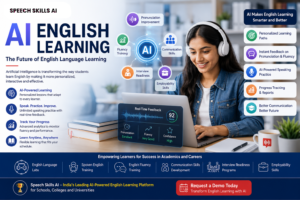
AI-powered labs use language technology to support speaking practice and help learners review their performance. Depending on the software, students may practise conversations, repeat words and sentences, and receive feedback on areas that need improvement.
This is where AI in English Language Learning can add value. Instead of depending only on a teacher’s feedback during class, students may get more chances to practise independently while the teacher continues to guide their learning.
For instance, a student preparing for a college interview can practise answering common questions. The learner can review the response, work on unclear words, and try again.
Speech Skills AI supports speaking and communication practice through an AI-based learning approach. For schools and colleges, the value lies in combining technology with teacher guidance rather than treating software as a replacement for teaching.
3. Traditional vs AI-Powered English Language Labs: Key Differences
Both approaches can support learning, but they differ in how practice and feedback are delivered.
Speaking Practice and Student Participation
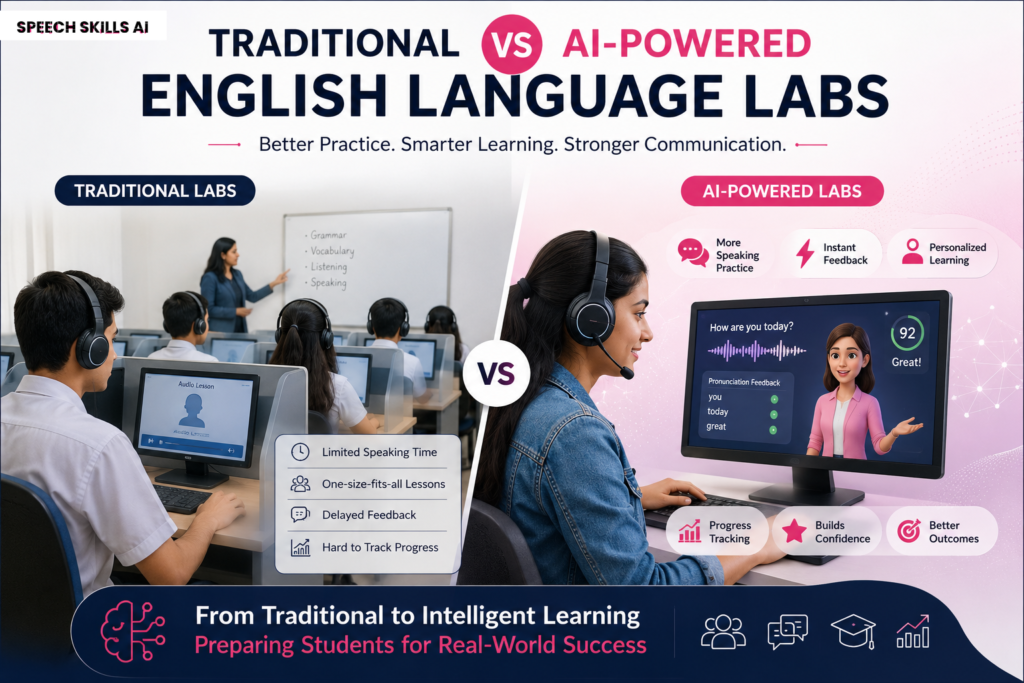
In a traditional lab, speaking activities may depend on the lesson plan, class size, and teacher availability. As a result, some students may get less time to speak.
AI-powered labs can give students more opportunities to practise at their own pace. This is especially useful for learners who feel nervous about speaking English in front of classmates.
Feedback and Pronunciation Improvement
Traditional teaching allows teachers to explain mistakes in context and understand a student’s learning needs. However, giving detailed feedback to every learner in a large class takes time.
AI tools may provide immediate feedback on selected aspects of speech, depending on their features. Students can use this feedback to work on Pronunciation Improvement, repeat difficult words, and build better speaking habits.
AI feedback should still be used with teacher support. Technology may not always understand the full meaning, accent, or context of a student’s response.
Progress Tracking and Personal Practice
Traditional labs can use tests, worksheets, and teacher observations to track progress. AI-enabled platforms may also offer practice records and performance reports, depending on the system.
These records can help teachers identify students who need extra support. In turn, teachers can plan more focused lessons instead of giving every learner the same activity.
4. Spoken English Training for Students: Why Practice Matters
Regular practice is one of the most important parts of learning a language. Students may understand English grammar but still struggle to use it in real conversations.
Spoken English Training for Students should include practical tasks such as introducing themselves, describing an idea, taking part in a discussion, and answering questions clearly.
AI-supported practice can give students more chances to try these tasks without feeling that every mistake is being judged by classmates. At the same time, teachers can use classroom discussions and group work to develop listening, teamwork, and social communication.
The best approach combines individual practice with real interaction.
5. English Fluency Training and Communication Skills Development
Fluency does not mean speaking quickly or using difficult words. It means expressing ideas clearly, using suitable words, and keeping a conversation going.
English Fluency Training can include short talks, role-play, everyday conversations, and question-and-answer activities. AI tools can support repeated practice, while teachers help students understand meaning, tone, and the needs of different situations.
Similarly, Communication Skills Development requires more than correct pronunciation. Students need to organise their thoughts, listen carefully, explain ideas, and respond in a suitable way.
For this reason, schools should choose learning activities that develop both language accuracy and real-world communication.
6. AI in Education: Building Employability Skills and Interview Readiness
English communication is useful beyond exams. Students may need it for higher education, internships, job interviews, and work with people from different backgrounds.
Employability Skills include clear communication, confidence, teamwork, and the ability to explain ideas. Meanwhile, Interview Readiness involves answering questions, describing personal strengths, and speaking calmly under pressure.
AI-powered language practice can help students prepare for these situations by allowing them to rehearse answers and improve weak areas. Teachers can then help learners make their answers clearer, more relevant, and more natural.
The wider role of AI in Education is to support teaching and learning when the technology is selected carefully. Schools should review student privacy, the quality of feedback, accessibility, and the role of teachers before adopting any AI tool.
UNESCO Resource: To understand how AI can support teaching and learning, explore UNESCO’s guidance and resources on AI in education.
7. Language Learning Technology: What Should Schools Look For?
Before investing in a language lab, schools and colleges should look beyond the use of AI as a feature. The real question is whether the solution helps students improve.
Consider these points:
- Useful speaking activities: Does the platform support practical English conversations?
- Pronunciation support: Can students identify and practise areas that need improvement?
- Student reports: Can teachers review progress and plan further support?
- Teacher involvement: Does the system support classroom teaching rather than replace it?
- Ease of use: Can students and teachers use it without unnecessary complexity?
- Privacy and safety: Are student data and access controls handled responsibly?
- Clear learning goals: Does the software connect activities to the school’s learning outcomes?
Schools can also explore free learning materials from the British Council’s LearnEnglish website to complement classroom teaching and independent practice.
8. Why Consider Speech Skills AI for English Language Learning?
Schools and colleges need solutions that address the practical challenges of language learning: limited speaking time, different student skill levels, and the need to track progress.
Speech Skills AI is designed to support English speaking practice and communication skills through AI-based learning. Its potential value for institutions is the opportunity to give learners structured practice while teachers remain involved in the learning process.
When evaluating the platform, institutions should review its practice activities, feedback options, reporting features, and suitability for their students. A demonstration can help decision-makers understand how it fits their teaching plans and language lab requirements.
Rather than choosing a tool only because it uses AI, schools should assess whether it meets their learning goals and works well alongside their existing teaching methods.
Conclusion: Traditional vs AI-Powered English Language Labs
The choice between Traditional vs AI-Powered English Language Labs depends on the needs of the institution and its students. Traditional labs offer teacher-led instruction and structured lessons, while AI-powered labs can add more opportunities for speaking practice, pronunciation improvement, feedback, and progress review.
For many schools and colleges, a combined approach may be the most useful: teachers provide guidance and human interaction, while AI supports regular practice and helps students work on specific skills.
With the right Language Learning Technology, institutions can create more opportunities for English fluency, communication skills development, employability skills, and interview readiness.
Want to explore AI-powered English speaking practice for your students?
Requesting for a Demo to learn more about Speech Skills AI and assess whether it fits your institution’s language learning goals.