Which is Better for Modern Learning?
In today’s digital world, communication skills have become just as important as technical knowledge. Schools, colleges, universities, and corporate training programs are constantly looking for better ways to help learners improve their English speaking and communication abilities. Traditionally, language labs have been the standard solution for decades. However, with the rise of Artificial Intelligence (AI), a new generation of AI-powered communication platforms is transforming the learning experience.
So, which is better—traditional language labs or AI-powered language learning? Let’s compare them.
What is a Traditional Language Lab?
A traditional language lab is a classroom equipped with computers, headsets, microphones, and pre-recorded language lessons. Students listen to audio lessons, repeat words or sentences, and complete exercises under the guidance of an instructor.
These labs have been effective in improving listening and basic pronunciation skills, but they often depend heavily on teacher supervision and fixed lesson plans.
Advantages of Traditional Language Labs
- Structured classroom environment
- Teacher guidance and monitoring
- Suitable for group learning
- Helps improve listening and pronunciation basics
Limitations
- Limited personalized feedback
- Fixed learning schedule
- Same lessons for every student
- Manual assessment takes time
- Limited practice outside the classroom
What is an AI-Powered Communication Platform?
AI-powered communication platforms use Artificial Intelligence, speech recognition, and machine learning to evaluate a learner’s speech in real time. Instead of simply playing audio recordings, these platforms analyze pronunciation, fluency, grammar, vocabulary, confidence, and speaking pace.
Learners receive instant feedback and can practice anytime from any device.
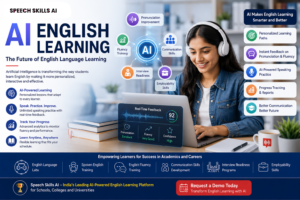
Key Benefits of AI Language Learning
1. Instant Feedback
Unlike traditional labs where students wait for teacher evaluation, AI provides immediate feedback on pronunciation, fluency, and speaking accuracy.
2. Personalized Learning
Every learner has different strengths and weaknesses. AI identifies improvement areas and creates personalized learning paths based on individual performance.
3. Practice Anytime, Anywhere
Students can practice from home, college, or office using laptops, tablets, or smartphones without waiting for lab sessions.
4. Real-Time Pronunciation Analysis
AI compares spoken words with standard pronunciation models and highlights mispronounced words instantly.
5. Progress Tracking
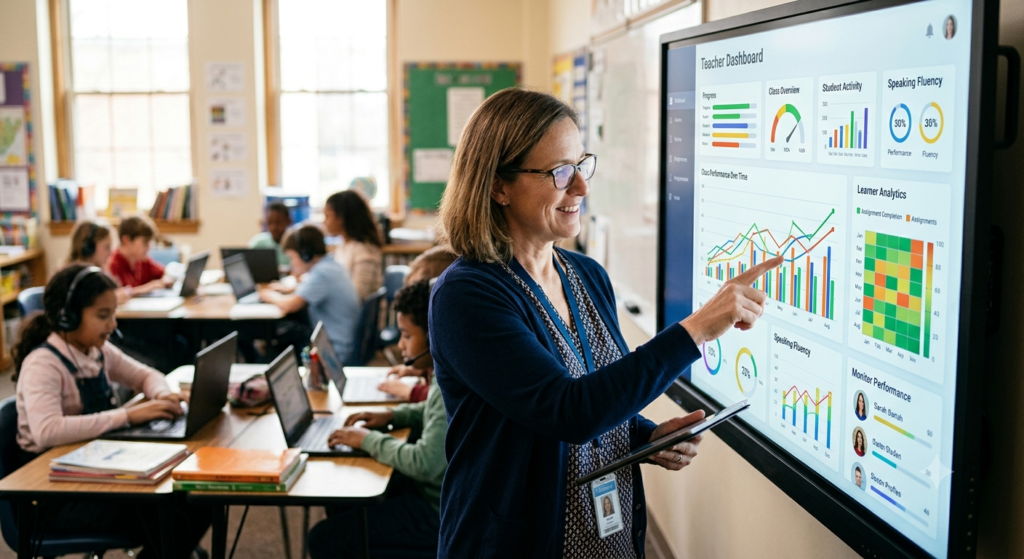
AI platforms maintain detailed performance reports showing improvements over time.
Students can monitor:
- Pronunciation Score
- Fluency Score
- Vocabulary Usage
- Grammar Accuracy
- Confidence Level
- Overall Communication Progress
6. Interview & Presentation Practice
Modern AI platforms simulate:
- HR Interviews
- Group Discussions
- Public Speaking
- Presentations
- Corporate Meetings
This prepares learners for real-world communication scenarios.